<?xml version="1.0" encoding="utf-8"?><mads xmlns="http://www.loc.gov/mads/" xmlns:mods="http://www.loc.gov/mods/v3" xmlns:xlink="http://www.w3.org/1999/xlink" xmlns:xsi="http://www.w3.org/2001/XMLSchema-instance" xsi:schemaLocation="http://www.loc.gov/mads/
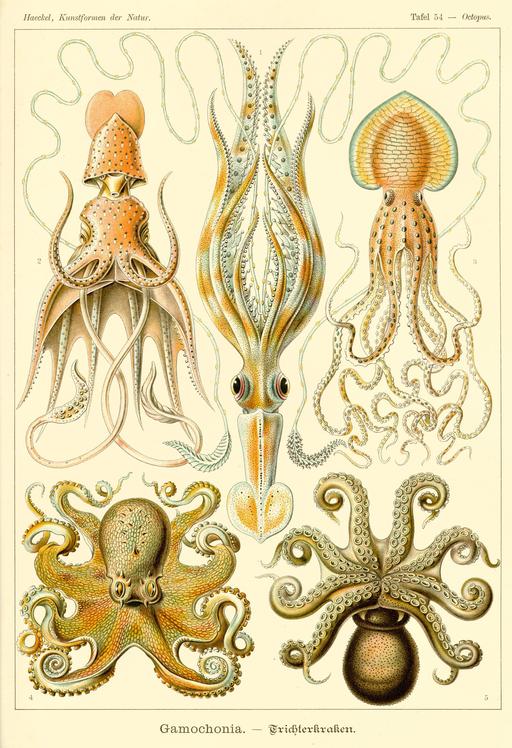
	mads.xsd"><authority><topic authority="http://thesaurus.abuledu.org/thesaurus/vocab/">Céphalopodes</topic></authority><related type="broader"><topic>Mollusca</topic></related><variant type="other"><topic>Seiche</topic></variant> <note xml:lang="fr"><![CDATA[ <p><img title="Planche de c&eacute;phalopodes biologiste allemand Ernst Haeckel (1834-1919)." src="http://data-cache.abuledu.org/512/cephalopodes-52cd9c95.jpg" alt="En partant d'en haut &agrave; gauche et dans le sens des aiguilles d'une montre : 1) Calmar bijou (Histioteuthis R&uuml;ppellii), 2) Calmar (Chiroteuthis Veranyi), 3) Pieuvre (Pinnoctopus cordiformis), 4) Octopode (Octopus granulatus), 5) Octopode commun (Octopus vulgaris)." width="150" height="219" /></p>
<p>Les <strong>C&eacute;phalopodes</strong> forment une classe de mollusques. Ils sont appel&eacute;s ainsi parce qu'ils poss&egrave;dent des tentacules &agrave; ventouses reli&eacute;es &agrave; leur t&ecirc;te qui comporte un v&eacute;ritable cerveau contenu dans un cr&acirc;ne cartilagineux, des yeux perfectionn&eacute;s et un bec corn&eacute;.</p> ]]></note></mads>