<?xml version="1.0" encoding="utf-8"?><mads xmlns="http://www.loc.gov/mads/" xmlns:mods="http://www.loc.gov/mods/v3" xmlns:xlink="http://www.w3.org/1999/xlink" xmlns:xsi="http://www.w3.org/2001/XMLSchema-instance" xsi:schemaLocation="http://www.loc.gov/mads/
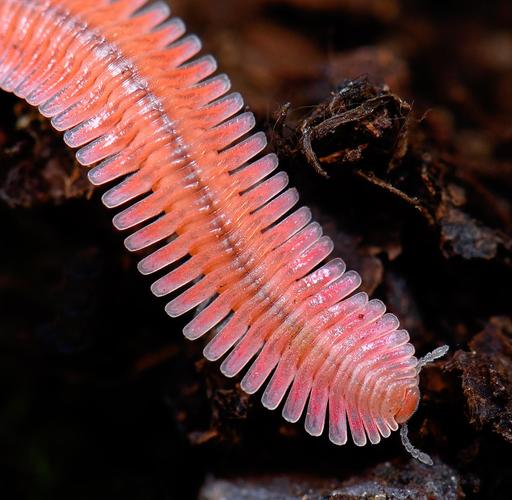
	mads.xsd"><authority><topic authority="http://thesaurus.abuledu.org/thesaurus/vocab/">Myriapoda</topic></authority><related type="broader"><topic>Arthropoda</topic></related><variant type="other"><topic>Mille-pattes</topic></variant><variant type="other"><topic>Myriapodes</topic></variant> <note xml:lang="fr"><![CDATA[ <p><img title="Mille-Pattes (Brachycybe lecontii) trouv&eacute; sous des b&ucirc;ches de bois." src="http://data-cache.abuledu.org/512/mille-pattes-rose-546d04c2.jpg" alt="Comme les vers de terre, mais moins profond&eacute;ment, ils contribuent &agrave; la formation de l'humus, forestier notamment, ainsi qu'&agrave; l'a&eacute;ration du sol et au brassage de ses couches superficielles et de la mati&egrave;re ligneuse en d&eacute;composition." width="150" height="146" /></p>
<p>Ils sont compos&eacute;s d'une t&ecirc;te suivie de nombreux anneaux semblables, portant chacun une ou deux paires de pattes, et commun&eacute;ment appel&eacute;s <em>mille-pattes</em>.</p> ]]></note></mads>