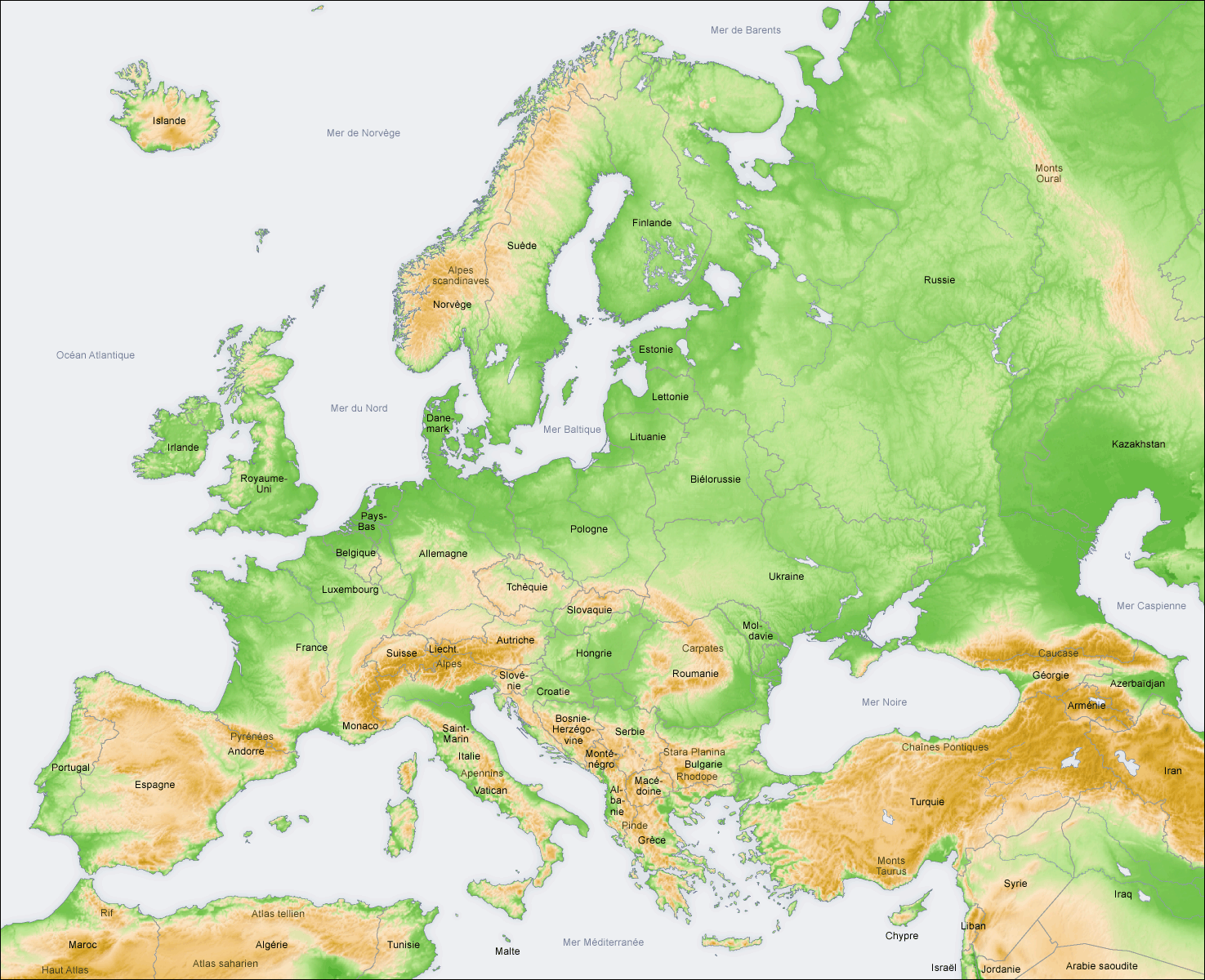
<?xml version="1.0" encoding="utf-8"?><metadata xmlns:dc="http://purl.org/dc/elements/1.1/"  xmlns:xsi="http://www.w3.org/2001/XMLSchema-instance" xmlns:dcterms="http://purl.org/dc/terms/"><dc:title xml:lang="fr">Europe</dc:title><dc:identifier>http://thesaurus.abuledu.org/thesaurus/vocab/?tema=85</dc:identifier><dc:language>fr</dc:language><dc:publisher xml:lang="fr">Oeuvre collective</dc:publisher><dcterms:created>2016-02-10 13:36:58</dcterms:created><dcterms:isPartOf xsi:type="dcterms:URI">http://thesaurus.abuledu.org/thesaurus/vocab/</dcterms:isPartOf><dcterms:isPartOf xml:lang="fr">Le Thésaurus d&apos;AbulÉdu</dcterms:isPartOf><dc:format>text/html</dc:format> <dc:description xml:lang="fr"><![CDATA[ <p><img title="Carte topographique de l'Europe" src="http://data-cache.abuledu.org/full/carte-topographique-de-l-europe-5056c01b.png" alt="Carte topographique l&eacute;gend&eacute;e de l'Europe." width="150" height="122" /></p>
<p>L'<strong>Europe</strong> est un continent. Il est bord&eacute; par l'oc&eacute;an Atlantique &agrave; l'ouest, l'oc&eacute;an Arctique au nord, la mer M&eacute;diterran&eacute;e et la mer Noire au sud. Le massif ancien de l'Oural (qui la s&eacute;pare de l'Asie) et la mer Caspienne &agrave; l'est. (source : vikidia.org)</p> ]]></dc:description></metadata>